
From the days of Brennus, through those of Hannibal, the Goths, the Landsknechts, the medieval pilgrims so vividly described by Boccaccio, the Grand Tour of the eighteenth and nineteenth centuries, or more recently the Germans or the Allies, Rome has always been a sought-after destination: a metropolis that inspired wonder and reverence in its visitors, and lust for spoils in those who time and again longed to conquer it.

Today, however, we live in times that, at least in appearance, are more peaceful. Pilgrims arriving in the city for the 2025 Jubilee differ little—except for being armed with smartphones ready to immortalize themselves in selfies even at the most mystical moments— from their more picturesque predecessors. By contrast, the legions, hordes, or regiments that once sought to penetrate the city walls have gradually transformed into compact groups of unarmed conquerors who, disembarked from cruise ships or countless buses, camp out in perpetual occupation of the squares and mangimifici (restaurants) of the center, resulting in the rarefication of Rome’s urban fabric and its inhabitants in a manner not unlike –though less bloody – that of the Sack of Rome in 1527.

So, whereas our ancestors once made bloody sacrifices to appease the gods upon hearing the terrifying cry “Hannibal ante portas”, today the old Punic would already be well inside those gates—perhaps cheerfully welcomed into a holiday rental or a bed & breakfast.
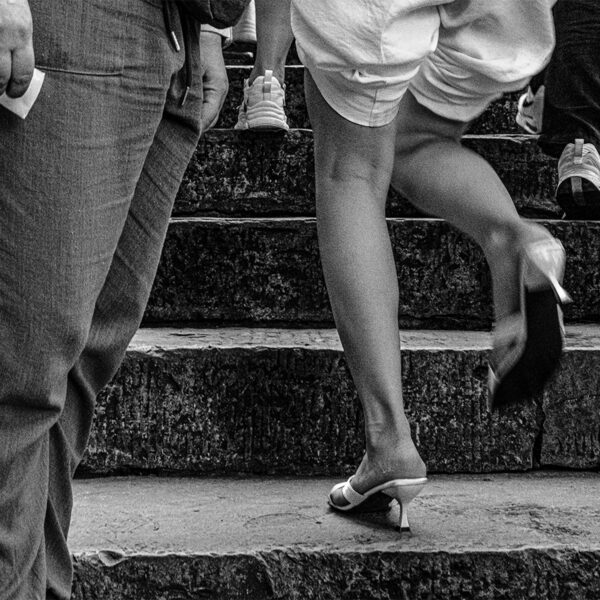
And here we are, then, in this carnival atmosphere, faintly grotesque: squads of assault nuns, mud-splattered cyclists, Yankee pilgrims, and jubilant tourists—at the first of four chapters on some of the slightly surreal aspects of this year 2025 in Rome.








Complimenti!!!
Grazie!
Belle le foto e simpaticissimo il racconto
Grazie Giuliano