STOP WAR



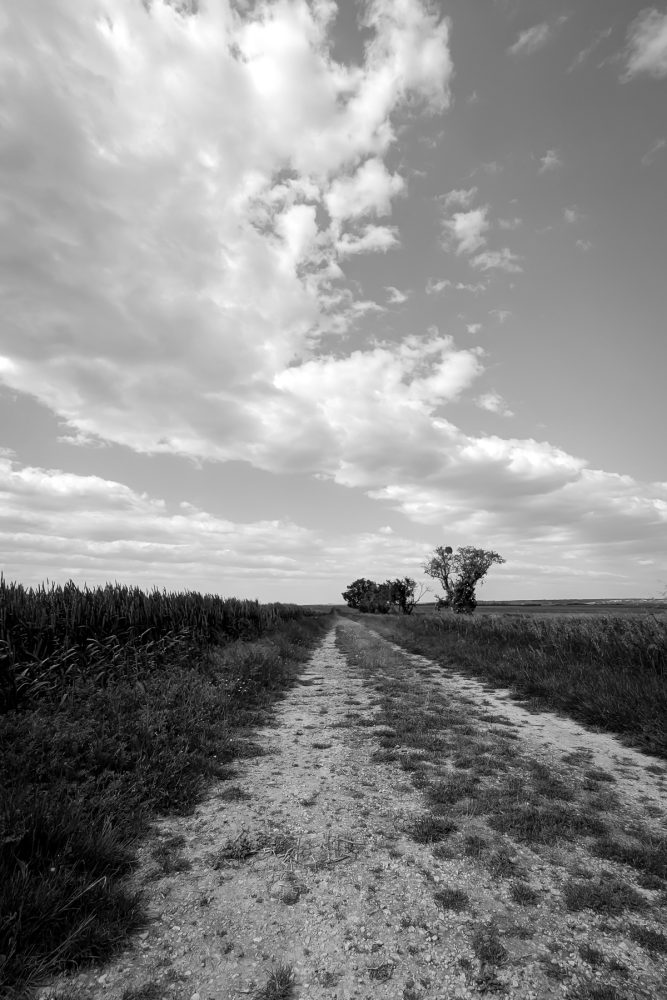
The road is never just a line. It’s not merely a stretch of asphalt or a dusty path connecting one point to another. In art, especially in literature and photography, the road becomes something alive, a mental landscape, an invitation to wander as much as to discover. It stands on its own as a subject, almost like a character, capable of holding entire worlds within it.
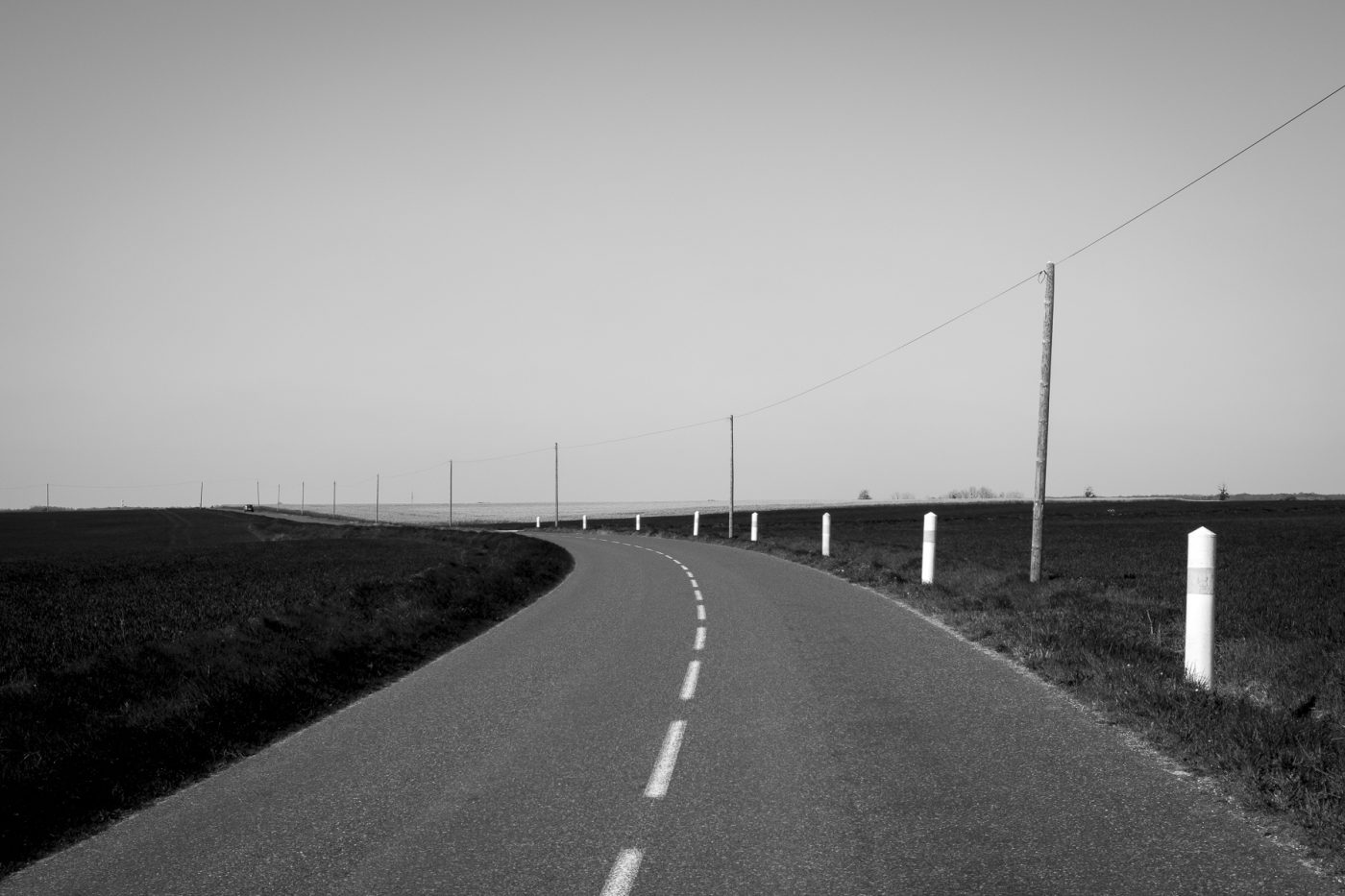
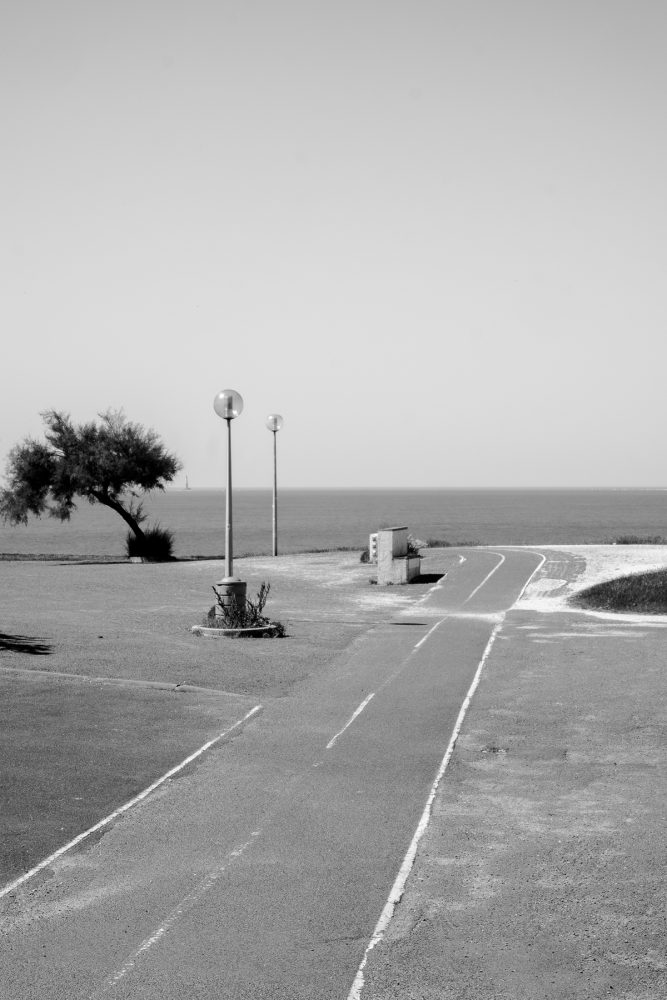
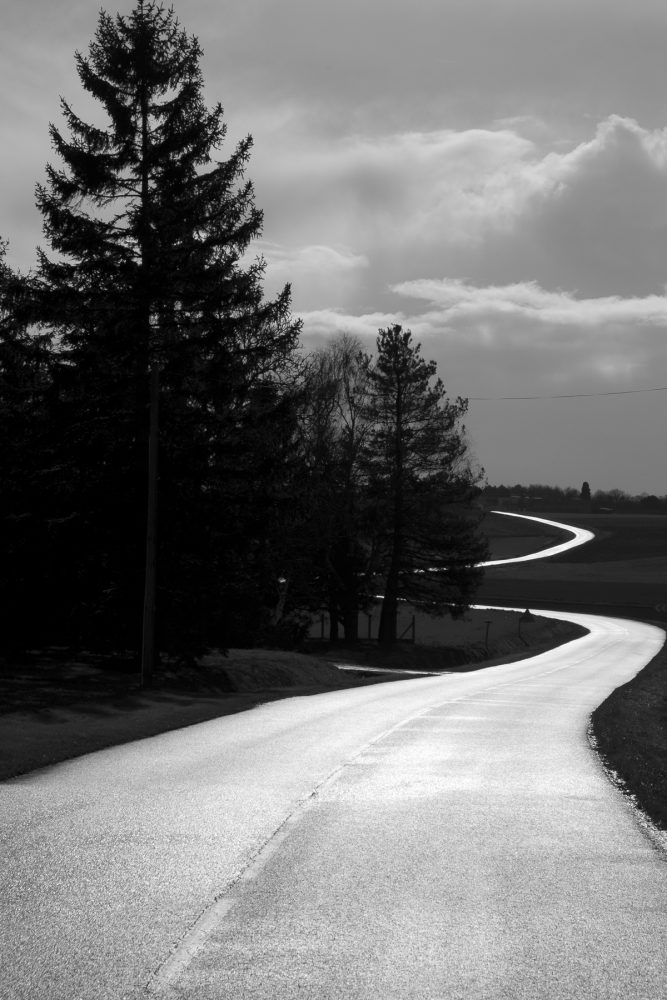
The road has always held a certain power. It means movement, promise, escape, pursuit. In literature, it often marks the beginning of a journey of transformation. Characters who take to the road rarely return unchanged. What’s striking, though, is that the road is never just a backdrop. It acts. It shapes perception, rhythm, thought. It sets the pace with its silences, its sudden accelerations, its unexpected pauses. In photography, the road plays a similar role. It structures the frame, guides the eye, opens up space. A line fading into the horizon, a curve disappearing behind a hill, a white stripe cutting through black, simple elements that become deeply evocative. Photographed, the road turns into a space of projection. It suggests what lies beyond the frame, what is yet to come, what has already passed.
But there isn’t just one road. There are countless roads.
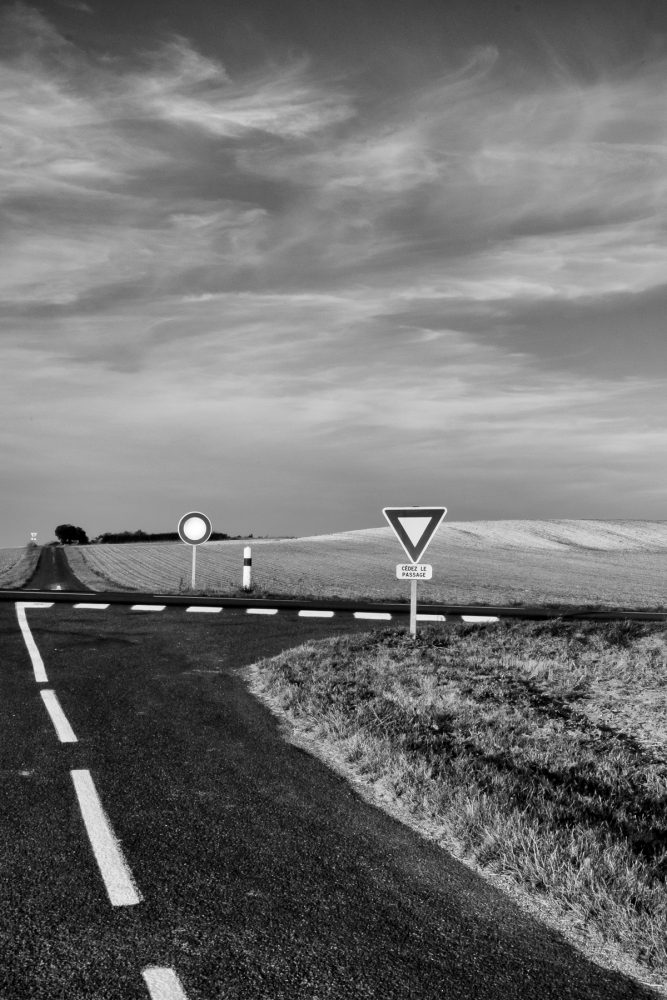
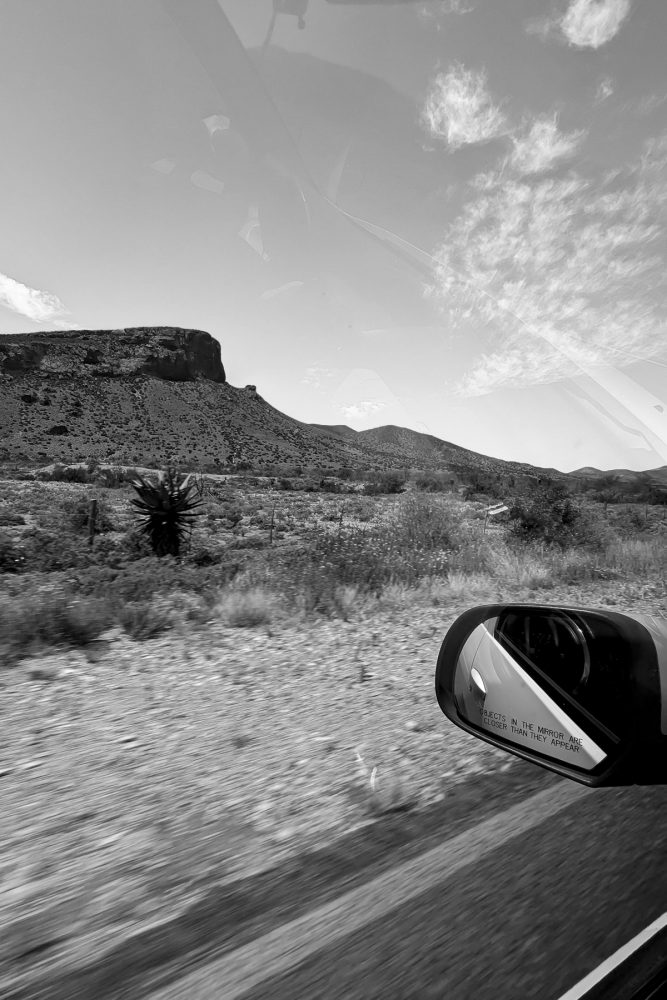
Deserted roads, washed in harsh sunlight, where time seems to stand still. Urban roads, dense with movement, where the individual dissolves into the flow. Mountain roads, winding and almost hostile, where every turn feels like a decision. Night roads, lit only by headlights, where the world narrows to a beam of light and the unknown beyond it. Each road carries its own atmosphere, its own emotional tone. And that’s precisely what makes it so compelling: it imposes nothing, yet suggests everything.
To evoke the road in art is always, in some way, to evoke oneself. Because no viewer or reader remains neutral when faced with a road. We project. We imagine. We remember. A simple image of a road can bring back childhood memories, sudden departures, long-awaited returns. It can also spark desire: to leave, to change, to slow down, to move faster. The road works like a mirror. It doesn’t tell us what it is, it reveals who we are.
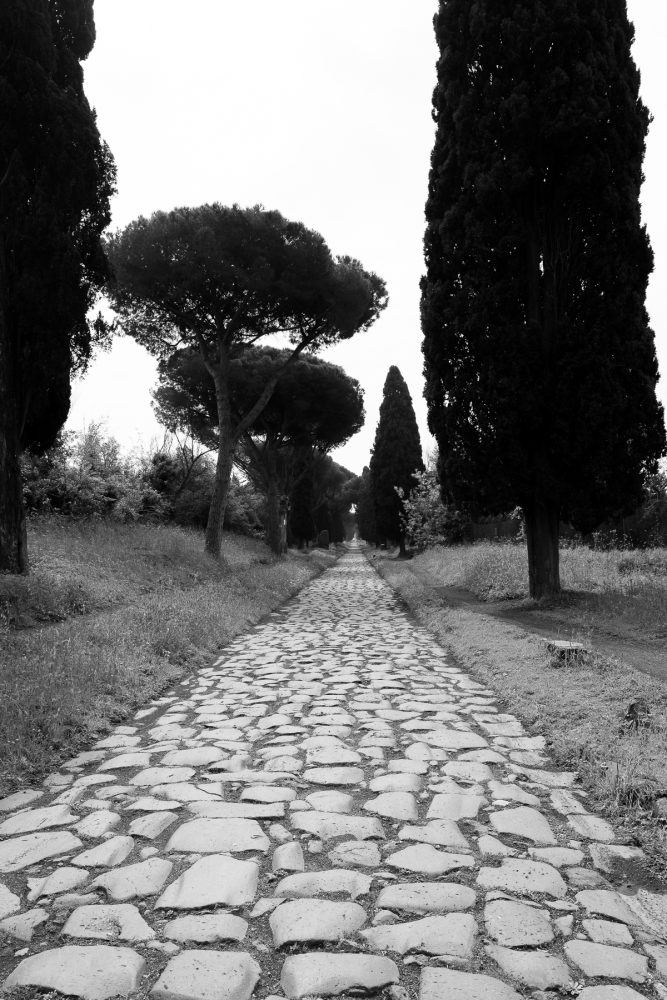
Some will see it as a promise of escape, an opening toward elsewhere. Others will read into it a sense of unease, even anxiety, the fear of the unknown, of losing one’s bearings. Between these poles lies an entire spectrum of emotions: the melancholy of passing landscapes, the thrill of departure, the fatigue of long distances, solitude, freedom.
That ability to hold contradictions is what makes the road so powerful. It is both departure and return, escape and search, isolation and connection. It is linear, yet it opens onto infinity.
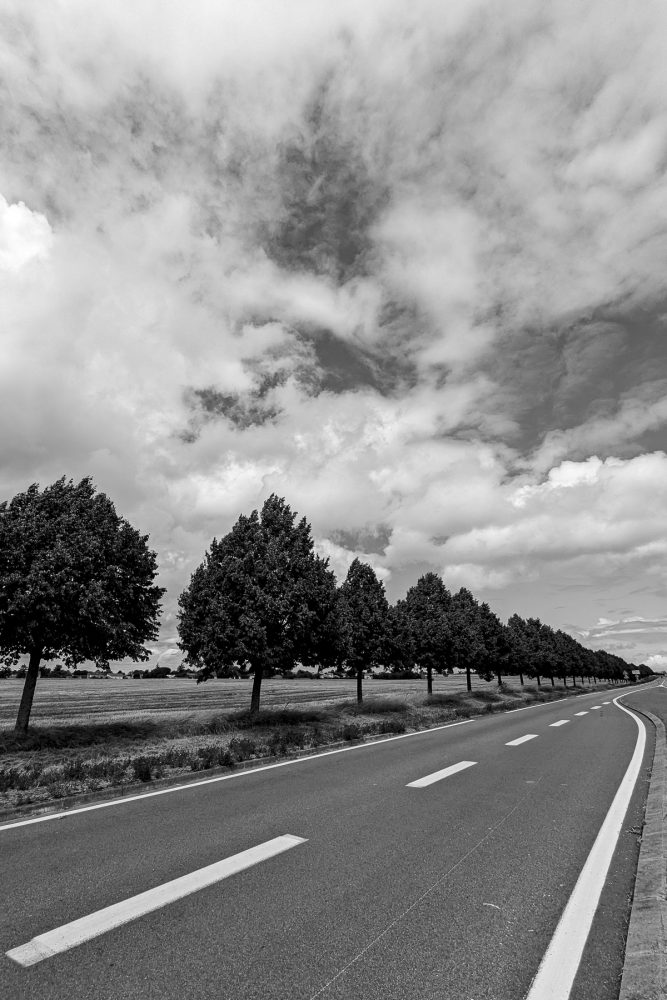
In a world saturated with images and information, the road retains a kind of radical simplicity. A line, a horizon, a vanishing point. And yet that simplicity is deceptive. Beneath it lies immense depth, a mental space where anyone can move freely. Maybe that’s why the road continues to haunt artists. It never runs dry. Every gaze renews it, every representation reshapes its meaning. It resists fixed definitions, slipping between categories.
At its core, the road is an experience.
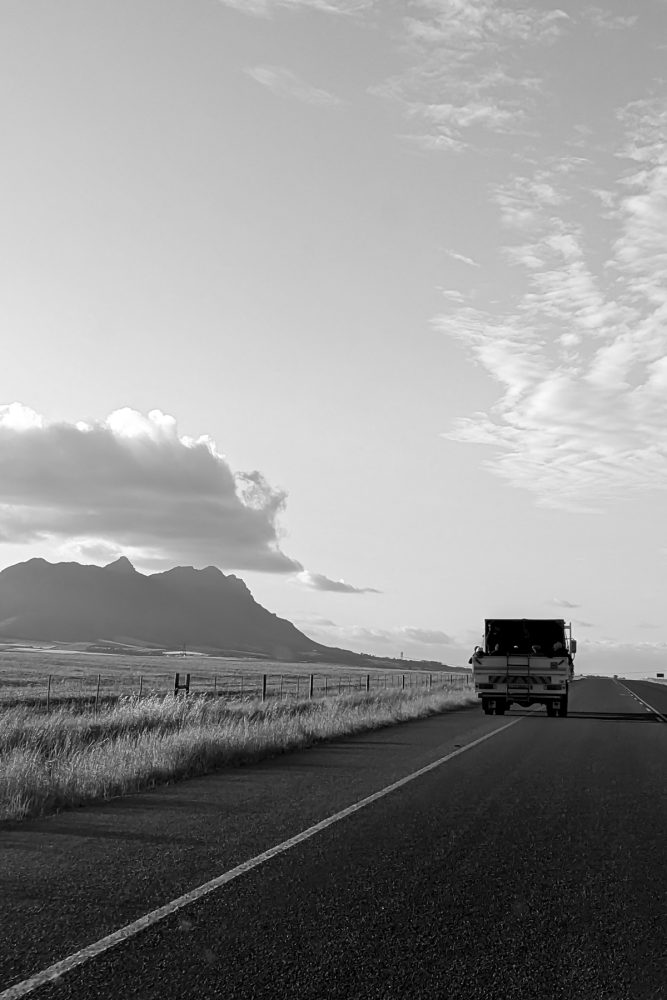
An experience of seeing, first. To follow a road is to accept a shift in perception, to let the landscape transform before your eyes. It means entering a particular sense of time, made of transitions and passages. An inner experience, too. What we cross on the outside always resonates with what moves within us. The road becomes a space for silent dialogue, sometimes confrontation, sometimes reconciliation.
And then there’s this simple, almost universal idea: the road goes on. It doesn’t end with the image or the page. It extends into the imagination of whoever looks at it, whoever reads it. That’s where its true power lies. In its refusal to close. In its openness. Its availability. Its life.
The road is not a place. It’s a possibility.