STOP WAR



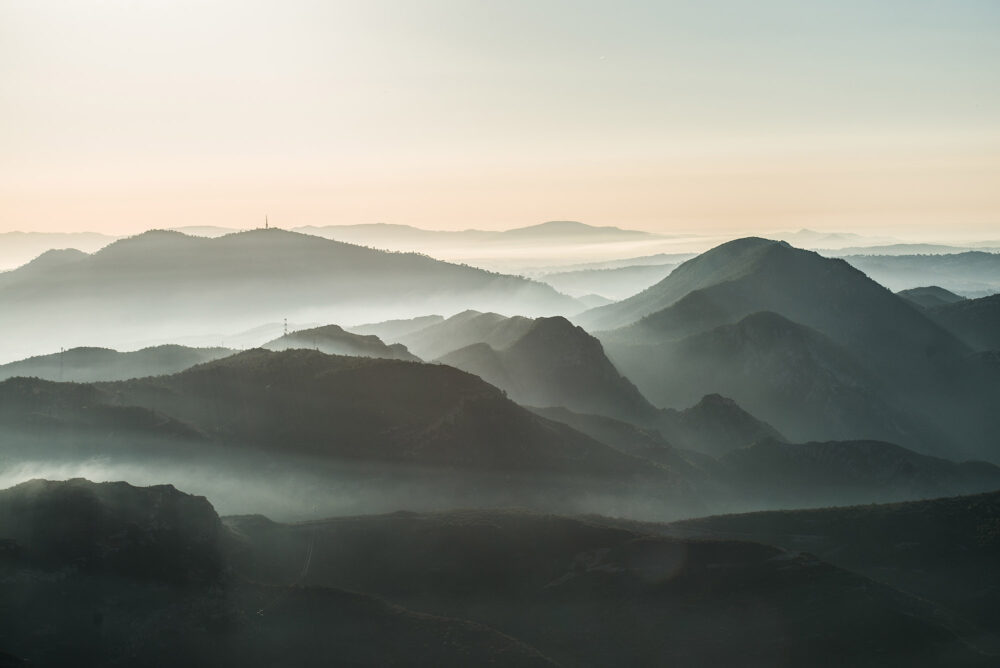
This article describes the southernmost end of the Pyrenees mountain range, the one that the French call the Pyrenees-Méditerranée, since it faces the Mediterranean side.
Starting from the mildness of southern France, this journey begins along a walking route followed by pilgrims heading to Santiago de Compostela, the final destination of a journey that from here is still perceived as very far away. Here one crosses sunny and peaceful countryside in southern France, among gentle hills and cultivated fields, dirt roads, and village fairs where local food and wine products are sold.
Looking at this peaceful landscape, we would not suspect the dangers that once existed in these areas—dangers that were real and substantial, and that led to the creation of fortified settlements which, still remarkably well preserved today, allow us to experience a distant and ancient past.
In southern France, especially in areas close to the Pyrenees, one encounters small fortified villages still well conserved. These are not walled cities, but tiny settlements: a church at the center, a small square, a handful of stone houses gathered around it, all enclosed by walls that once provided protection and security.
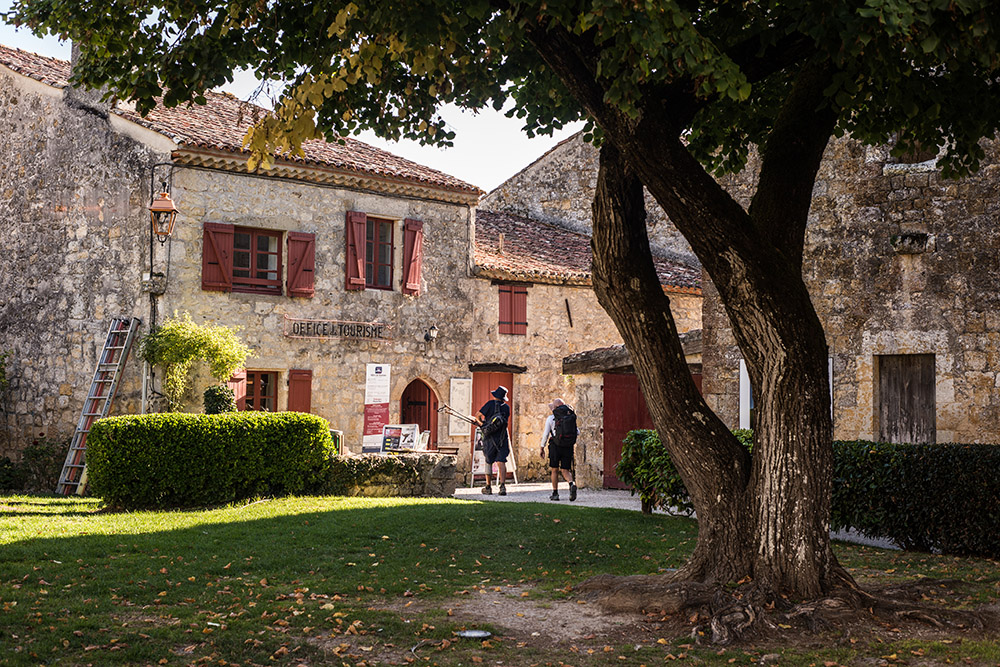
During the medieval period, rural populations lived scattered across the countryside, but in times of instability—wars, invasions, raids—they gathered within protected spaces. Stone walls were built, sometimes reinforced with towers or with a single entrance gate that would be closed at sunset. Inside the walls space was limited, so houses were built close to one another, forming a compact network of narrow streets and tall buildings.
Today many of these small settlements still preserve their original structure. Walking within their walls one senses a feeling of intimacy and protection: a few houses, silence, ancient stone warmed by the southern sun. The architecture tells a story of close-knit communities, solidarity, and life shaped by the realities of an ancient territory and its evolution over time.
Walking along the paths that connect these villages, one inevitably encounters the great fortified city of Carcassonne, an evocative jewel that—although somewhat tourist-oriented nowadays—should not be missed. It lies at the foot of the mountains; its border position and imposing fortifications evoke countless human stories, adventures, and ancient mysteries.
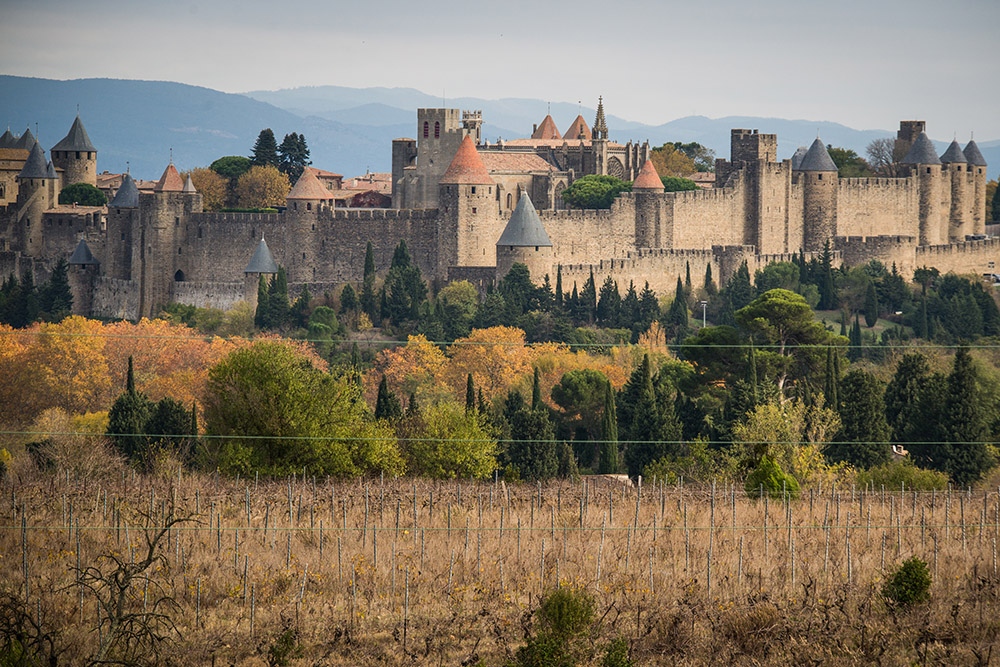
Carcassonne is one of the most spectacular examples of a fortified city in southern France. Located in the region of Occitania, at the foot of the Pyrenees, it is famous for its imposing medieval citadel known as La Cité.
Unlike the small fortified villages composed of a few houses around a church, Carcassonne is a true walled city with a complex and monumental defensive structure. Its double walls extend for about three kilometers and are reinforced by numerous watchtowers. The present appearance is largely the result of nineteenth-century restorations led by the architect Viollet-le-Duc, who restored the medieval character we see today.
Inside the walls are cobbled streets, houses, shops, and above all the Basilica of Saint-Nazaire and the Count’s Castle, the political and military heart of the city in the Middle Ages. In the past Carcassonne had a crucial strategic role: it controlled important communication routes between the Atlantic and the Mediterranean and played a major role during the period of the crusade against the Albigensians.
Today the citadel is a UNESCO World Heritage Site and one of the most visited medieval sites in Europe. Walking among its towers and ramparts allows us to immerse ourselves in the human reality of another time offering an interesting opportunity to reflect on the evolution of the meaning of the city over time.
After visiting the city, we arrive at the moment of the mountain pass. Choosing among the various Pyrenean routes, we cross to the Spanish side and encounter a different interpretation of the landscape.
The crossing possibilities are numerous; here I suggest the simplest and southernmost one, running parallel to the Franco-Spanish highway and leading into “First Catalonia”, the land of the celebrated and eccentric Salvador Dalí. He himself offers a sort of introduction to these places in his Diary of a Genius:
“While having breakfast, I watch the sun rise and realize that, since Port Lligat lies on the easternmost point of Spain, every morning I am the first Spaniard to see it. In fact, even in Cadaqués, which is only ten minutes from here, the sun arrives later. I also reflect on the colorful nicknames of the fishermen of Port Lligat: the marquis; the minister; the African; there are even three Jesus Christs. I am convinced that in few places in the world—especially such small ones—can one find three Jesus Christs!”
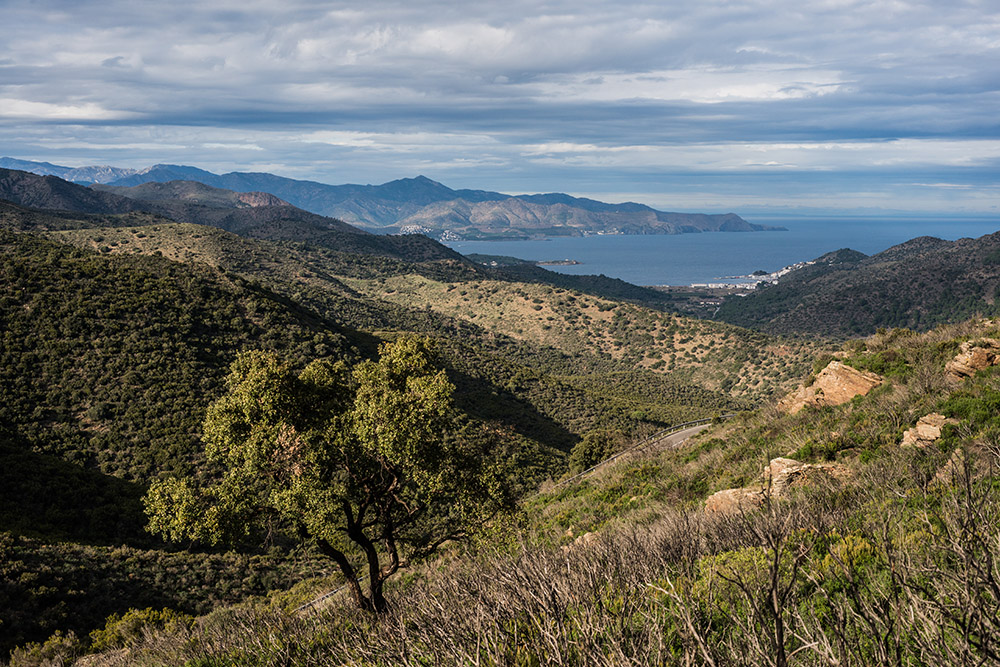
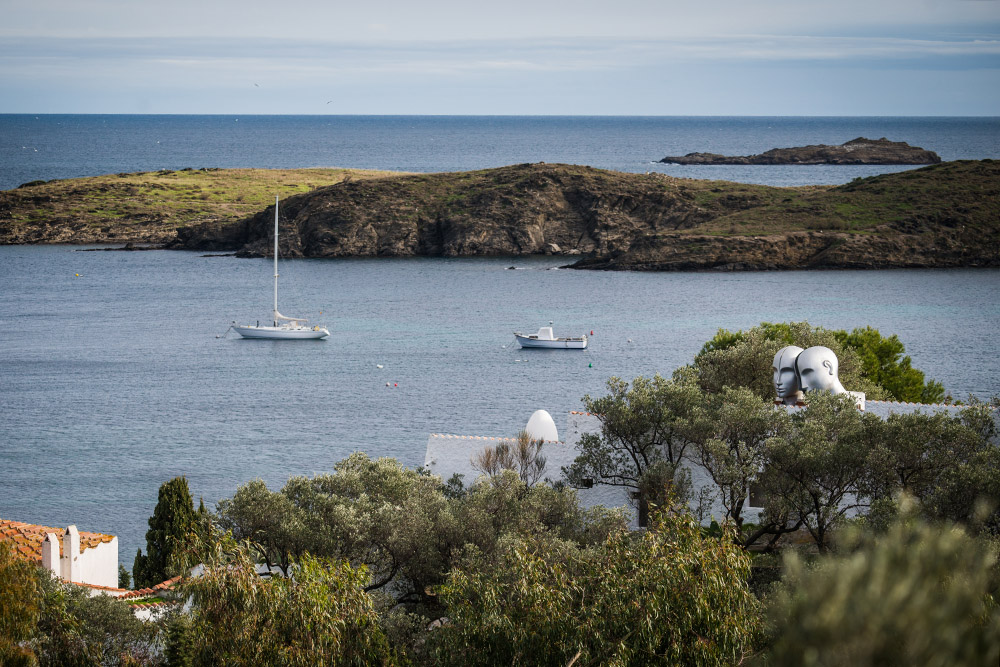
If Figueres represents Dalí’s roots, Cadaqués embodies his poetic soul. This small village overlooking the Mediterranean, with its white houses and intense light, was an inexhaustible source of inspiration for him. Nearby, in the bay of Port Lligat, stands the Salvador Dalí House-Museum, the home where he lived and worked for many years with his wife Gala.
Here lies the essential landscape: wind-shaped rocks, calm sea, and clear horizons that appear in many of his works. The bizarre shapes of the cliffs in the area and the vast spaces of the horizon directly influenced his imagination. It is easy to recognize these elements—absorbed and re-expressed—in his famous paintings.
The house itself is an eccentric creation, a labyrinth of irregular rooms, symbolic objects, and spaces conceived like theatrical sets.
Cadaqués was also a meeting place for artists and intellectuals of the twentieth century. Yet for Dalí it remained above all an intimate, almost mystical place, where silence, nature, and the world of his affections nourished his creativity.
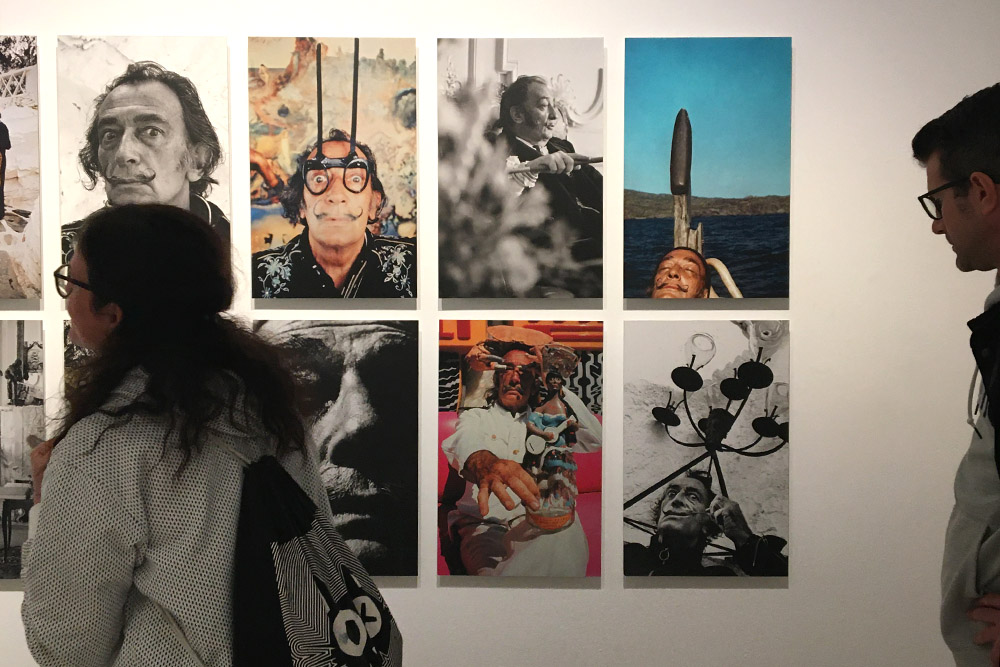
Figueres is the city where Dalí was born in 1904 and where he wished to be buried. Here stands the famous Dalí Theatre-Museum, built on the ruins of the old municipal theatre. It is not simply a museum but a total work of art designed by Dalí himself.
The building, with its large geodesic dome and surreal decorations on the roof, is conceived as a journey into the artist’s life. Dalí imagined it as his final great masterpiece: a place where visitors could enter his world of optical illusions, symbols, obsessions, and theatricality.
It is significant that it was built in his hometown, almost closing the circle of his life. Today Dalí is buried in a crypt beneath the museum, making Figueres not only the place of his origins but also that of his final memory.
“If I had painted well all my life, I would never have been happy. Now it seems to me that I have reached the same degree of maturity as Goethe when he arrived in Rome and exclaimed: Finally, I am about to be born!”
As the final stage of this journey we head north, leaving behind the sea and the coastal towns. Continuing along the mountain chain on the Spanish side, we reach the mountain of Montserrat, where the famous monastery stands.
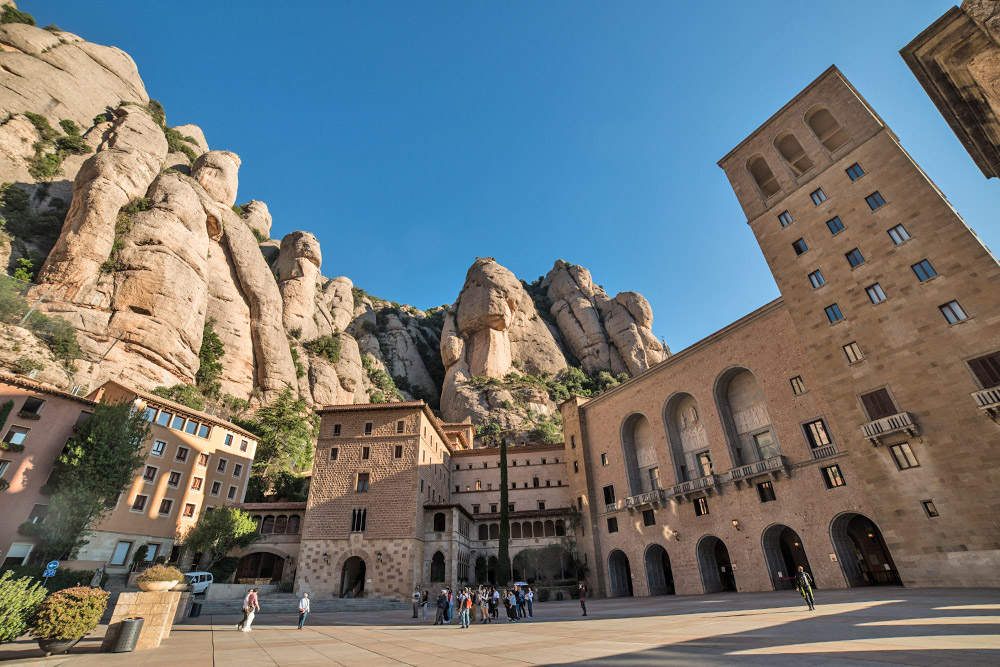
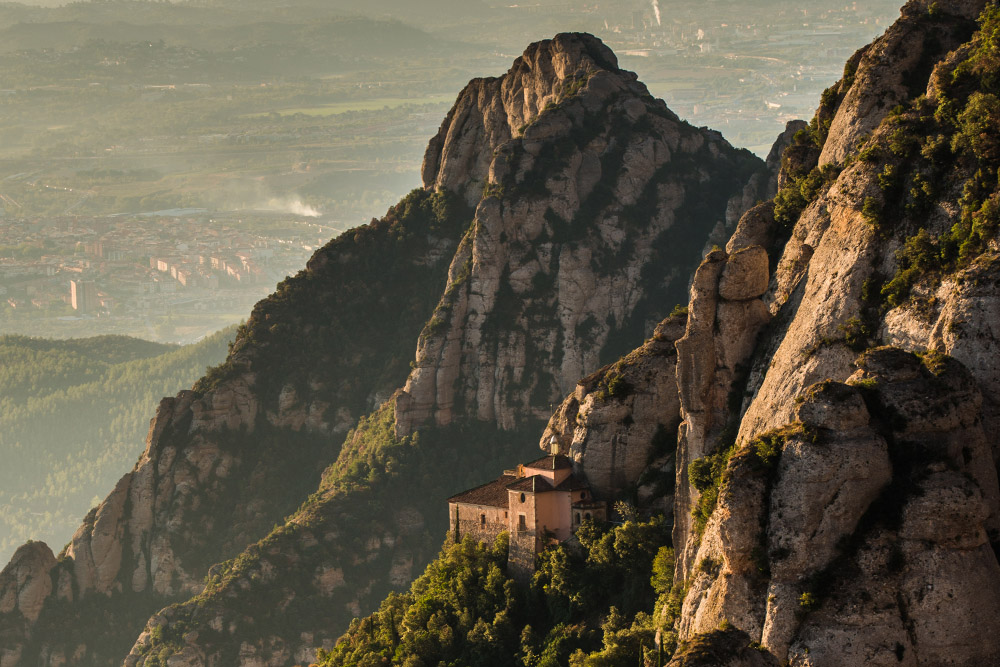
The monastery is a jewel, and the place chosen for its construction is spectacular: mountains with peaks sculpted by the wind embrace the great building, which in turn offers an exceptional panoramic view over all of lower Catalonia.
Today the monastery is very well connected with Barcelona and therefore heavily visited by tourists. During the day the crowds make it difficult to enjoy the magical atmosphere of the place. For this reason I recommend going up the mountain toward evening, dining at the restaurant, and spending the night at the monastery. There are two options: an hotel and a traditional, cheap hostel for pilgrims.
Once the tourists leave after sunset, you can experience extraordinary peace and silence. After a restful night, with a bit of luck, you may witness a mystical sunrise: the sun rising over all of Catalonia while the mountains are still wrapped in the mist of the night.
The Monastery of Montserrat lies in Spain, in the heart of Catalonia, about fifty kilometers from Barcelona. It stands more than 700 meters above sea level, nestled among the spectacular rock formations of the Montserrat mountain, whose name means “serrated mountain” because of the jagged shape of its peaks.
The landscape itself contributes to the mystical dimension of the place: vertical rocks, silence, and a wide view of the horizon create a sense of detachment from everyday life.
The monastery was founded in the eleventh century and entrusted to Benedictine monks. From the beginning it became a pilgrimage center thanks to the presence of the Virgin of Montserrat, known as “La Moreneta”. According to tradition, the statue was discovered in the year 880 in a cave in the mountain after some shepherds saw a mysterious light and heard heavenly singing. When people tried to move the statue, it supposedly became inexplicably heavy—interpreted as a divine sign that it wished to remain there. For this reason a sanctuary was built on that very spot.
From a spiritual perspective, Montserrat is a place of retreat and contemplation. The Benedictine order follows the rule ora et labora (“pray and work”), which unites spiritual life with daily commitment. As always the mountain itself reinforces this experience: ascending toward the monastery symbolically represents an inner ascent, a path reflecting the search for God through silence and nature.
Today Montserrat continues to attract both pilgrims and visitors. Some come for faith, others out of curiosity or for the extraordinary landscape, but many report sensing a particular atmosphere: a feeling of peace, suspension; a contact with something greater.