 STOP WAR


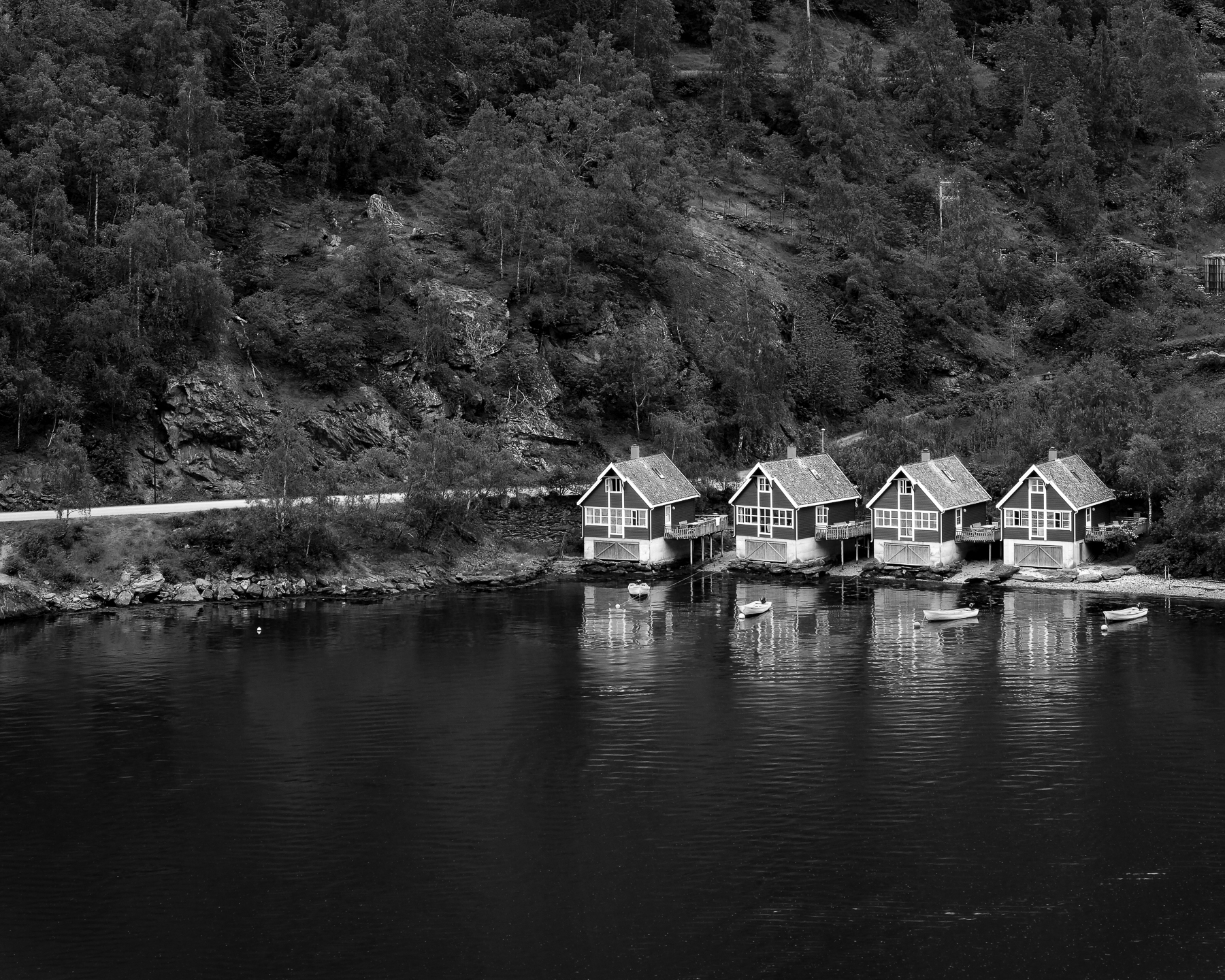
Norway is often photographed for its breathtaking landscapes. Fjords cutting deep between steep mountains, waterfalls cascading down rock faces, forests, deep waters and ever-changing horizons: everywhere, nature seems to occupy an extraordinary amount of space. It does not simply surround people; it sets its own rhythm, its own distances and, at times, its own rules.
The weather can intensify this feeling. Wind, rain, snow, fog, rapidly shifting light and long winter months are constant reminders that human beings do not have complete control over their environment. In such a place, living with nature means adapting to it rather than trying to dominate it.
Over time, this reality seems to have fostered a particular sense of humility among Norwegians: a way of inhabiting the landscape without attempting to conquer it.
Houses, villages, harbours and roads appear less like human claims on the land than carefully placed elements within an environment that remains far more powerful than we are.

It is perhaps this sense of scale that makes the Norwegian landscape so compelling to photograph. Faced with a mountain or a fjord, human presence can seem almost insignificant.
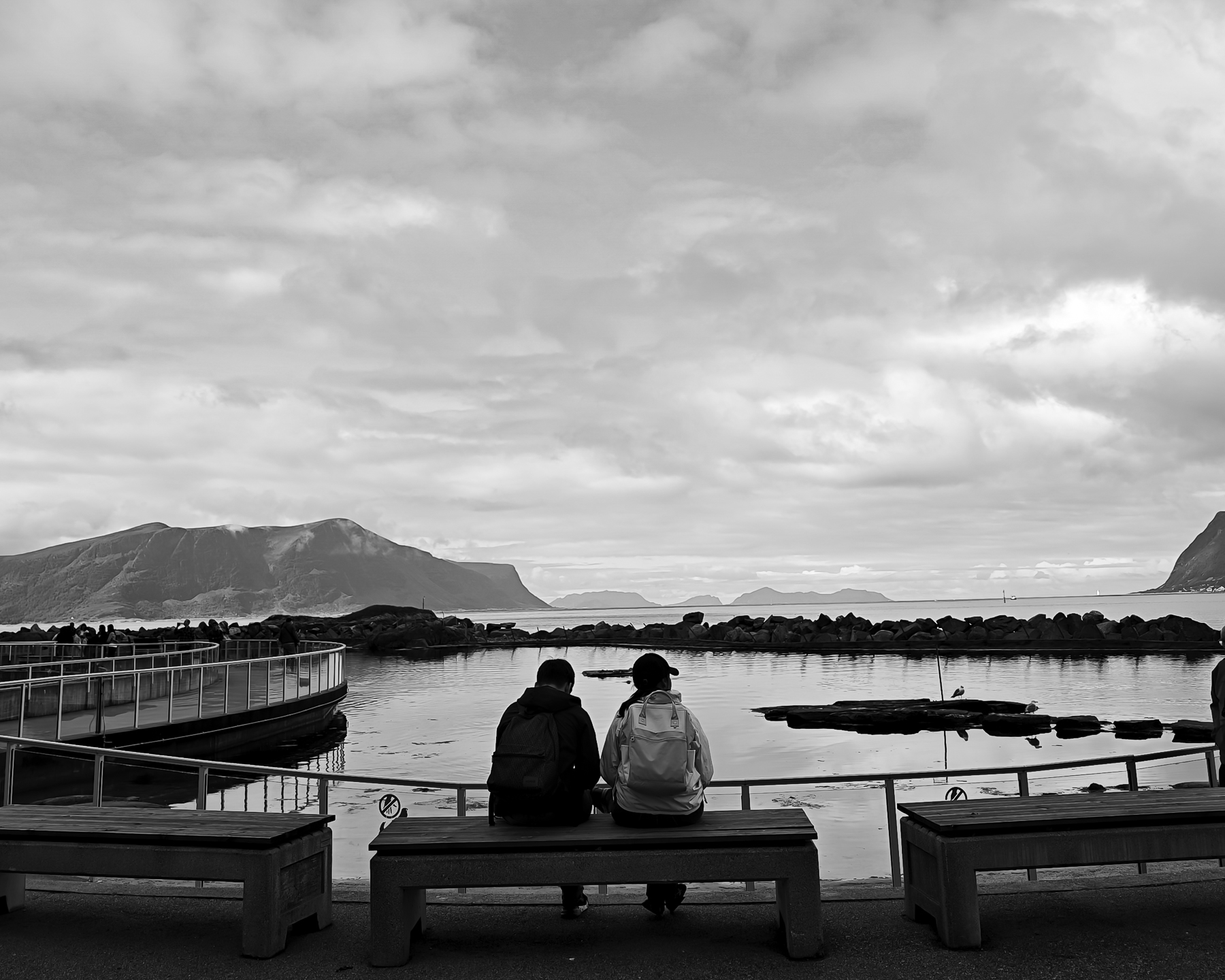
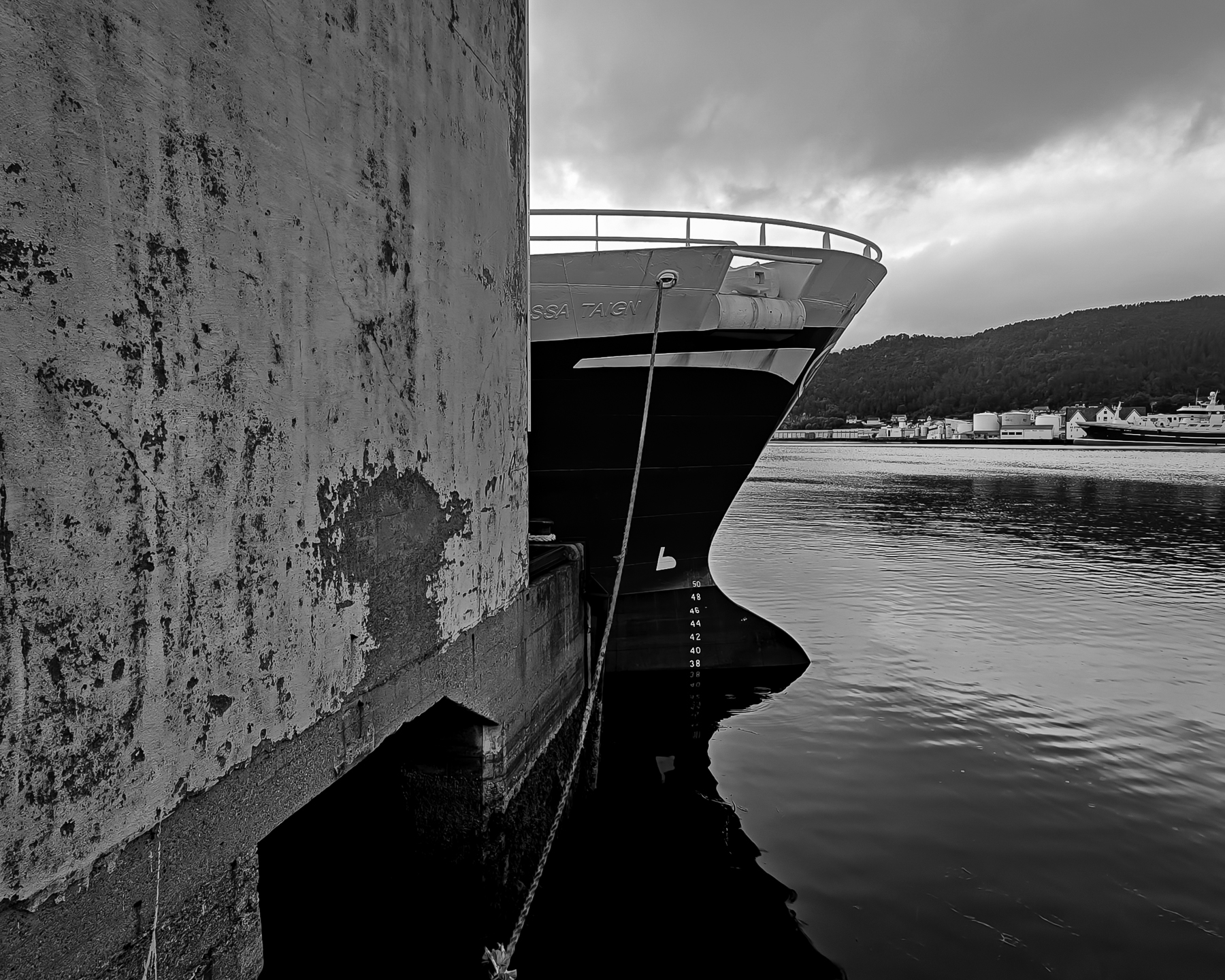
A figure sitting beside the water, a few houses along a bay or a boat moored at the shore are enough to give the vastness a human measure. This disproportion reminds us of something modern societies sometimes tend to forget: we are part of the landscape, but we do not own it.
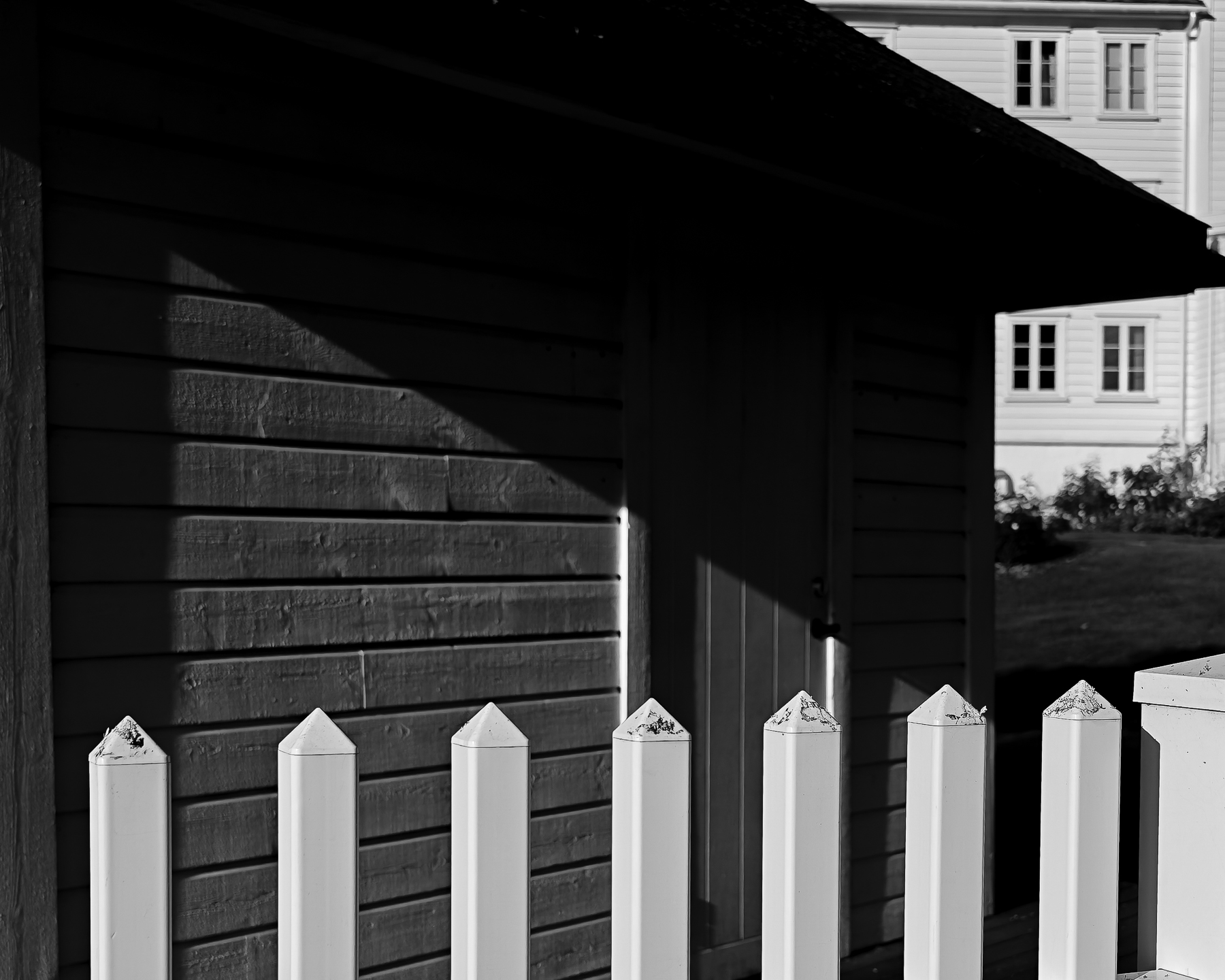
Photography can make this relationship visible. It can reveal the power of a territory while also drawing attention to the discreet traces of those who live there. A façade, a roof, a jetty or a boat can become as significant as the mountain towering above them. The landscape is no longer simply a natural spectacle; it becomes a shared space, a living environment in which people have to find their place.
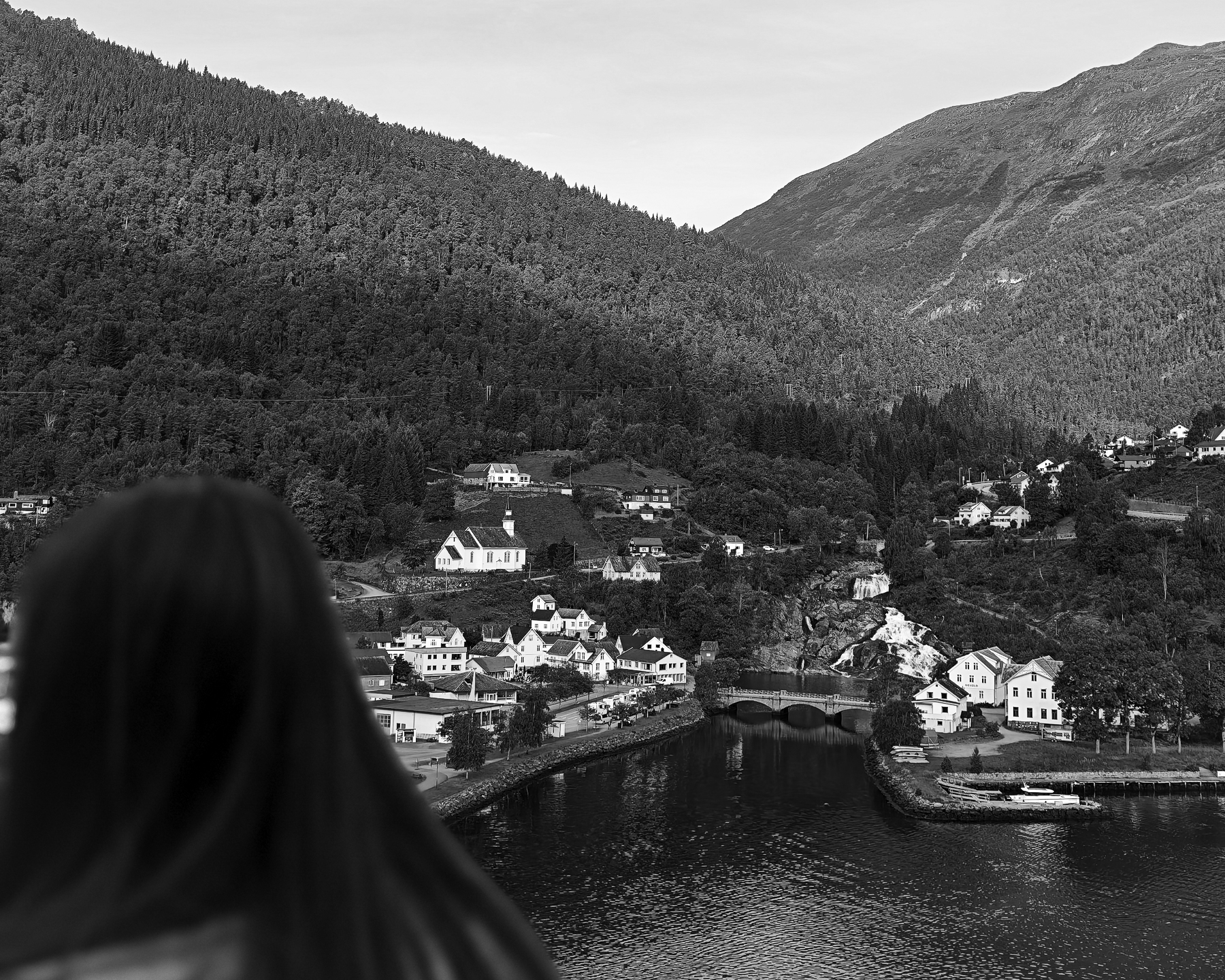
The choice of black and white reinforces this way of seeing. Norway has an obvious richness of colour: brightly painted houses, vegetation, blue water and constantly shifting skies. Yet colour can sometimes lock a landscape into its familiar tourist identity. Remove it, and attention moves towards light, texture, volume and contrast.
A mountain becomes a mass, a fjord a line, a roof a geometric shape, the bark of a tree an almost abstract texture. Black and white therefore makes it possible to move beyond simply identifying a place and instead focus on its structure and tensions.
In landscapes where nature already possesses such immense visual power, photography does not necessarily need to emphasise the spectacular. It can reveal something quieter: a sense of restraint, silence and balance.
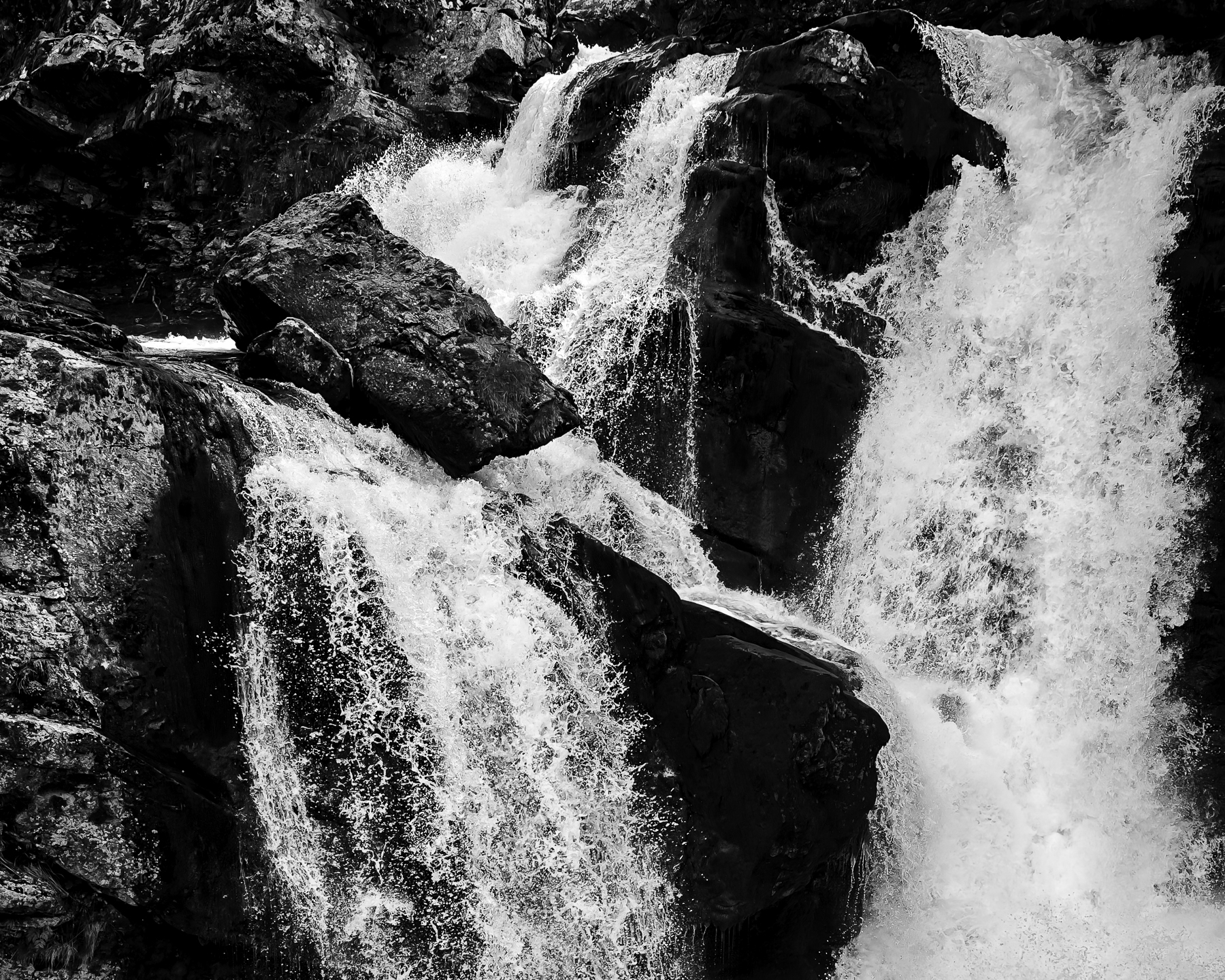
This relationship with the land becomes even more compelling when nature is understood not simply as something to admire, but as a place in which life actually unfolds.
Living beside a fjord, building in a valley, navigating between islands or settling at the foot of a mountain inevitably means taking the landscape, the climate and the seasons into account.
Such proximity can create a different awareness of the value of the environment.
When a territory is at once a place to live, a collective memory and a resource, protecting it is no longer an abstract idea. It becomes a necessity. Perhaps this is one of the most striking aspects of the Norwegian relationship with nature: the determination to preserve an environment that is not merely considered beautiful, but fundamental to a way of life.

This reflection takes on particular relevance at a time when the consequences of climate change are making the limits of our model of development increasingly visible.
The Norwegian experience invites us to reconsider our relationship with the natural world: not as something available to exploit, reshape or control, but as an environment with which we must learn to live. Landscape photography can therefore go beyond contemplation and become a way of questioning that relationship.
Images of Norway reveal vast territories, but they also show a discreet way of inhabiting them. Human constructions seem to seek their place rather than occupy every available space; figures appear small against mountains; villages settle naturally into the terrain; boats extend the lines of the shoreline.

This restraint may be one of the most valuable lessons these landscapes have to offer.
At a time when humanity is increasingly aware of the impact of its activities on natural systems, we need to rediscover the ability to live in a landscape without possessing it. Norway reminds us that living alongside an exceptional environment also means accepting its constraints, respecting its rhythms and wanting to pass it on intact.
The landscape is no longer simply something we look at. It becomes something we depend on, and perhaps something we now have a responsibility to protect.
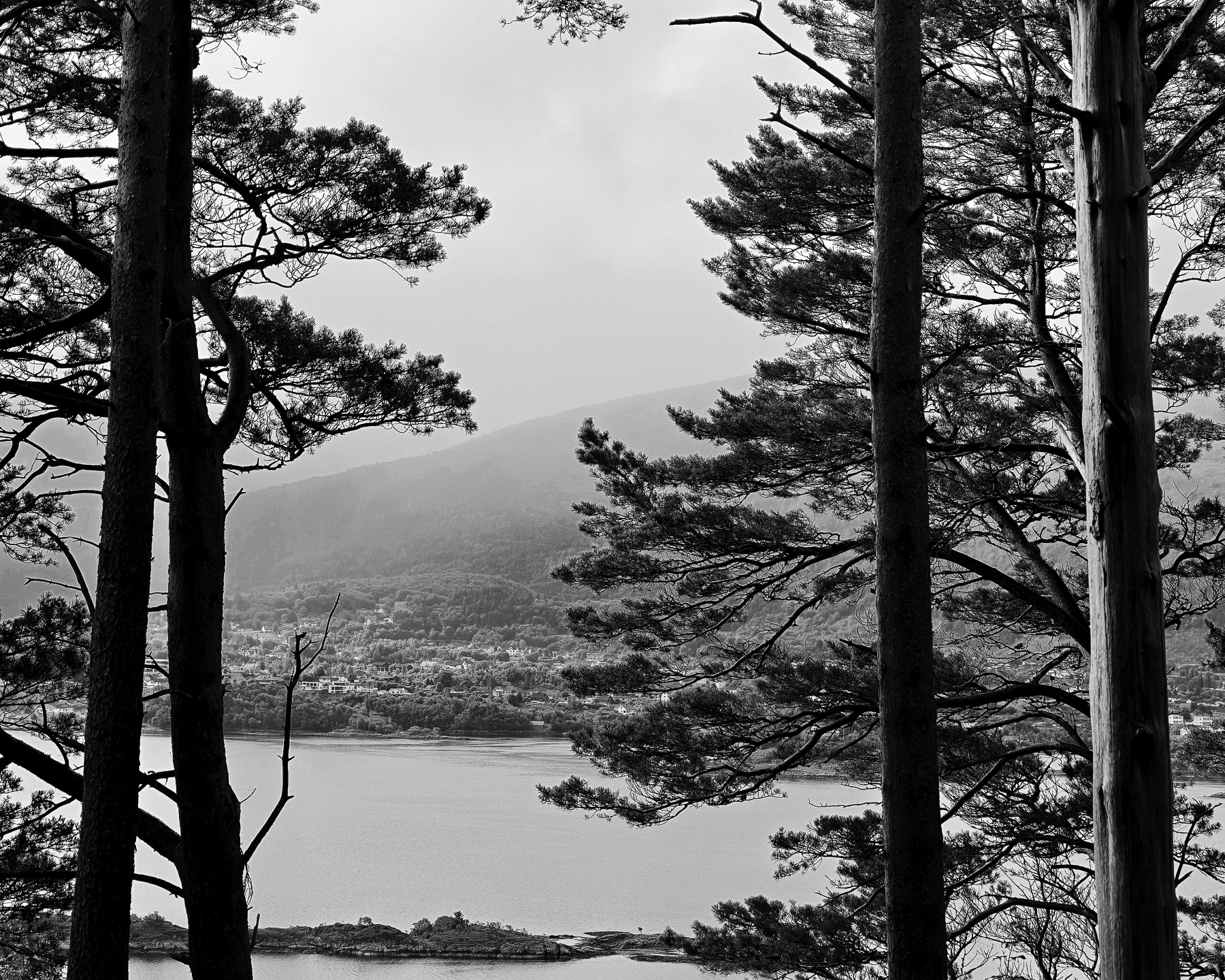




Great shots… B/W adapt perfectly! Congrats
Thanks Alessandro !